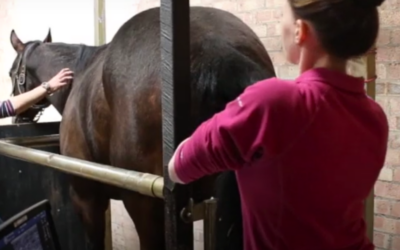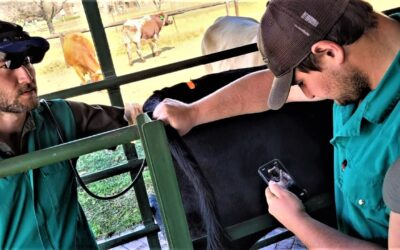
Performing a quick AFAST scan
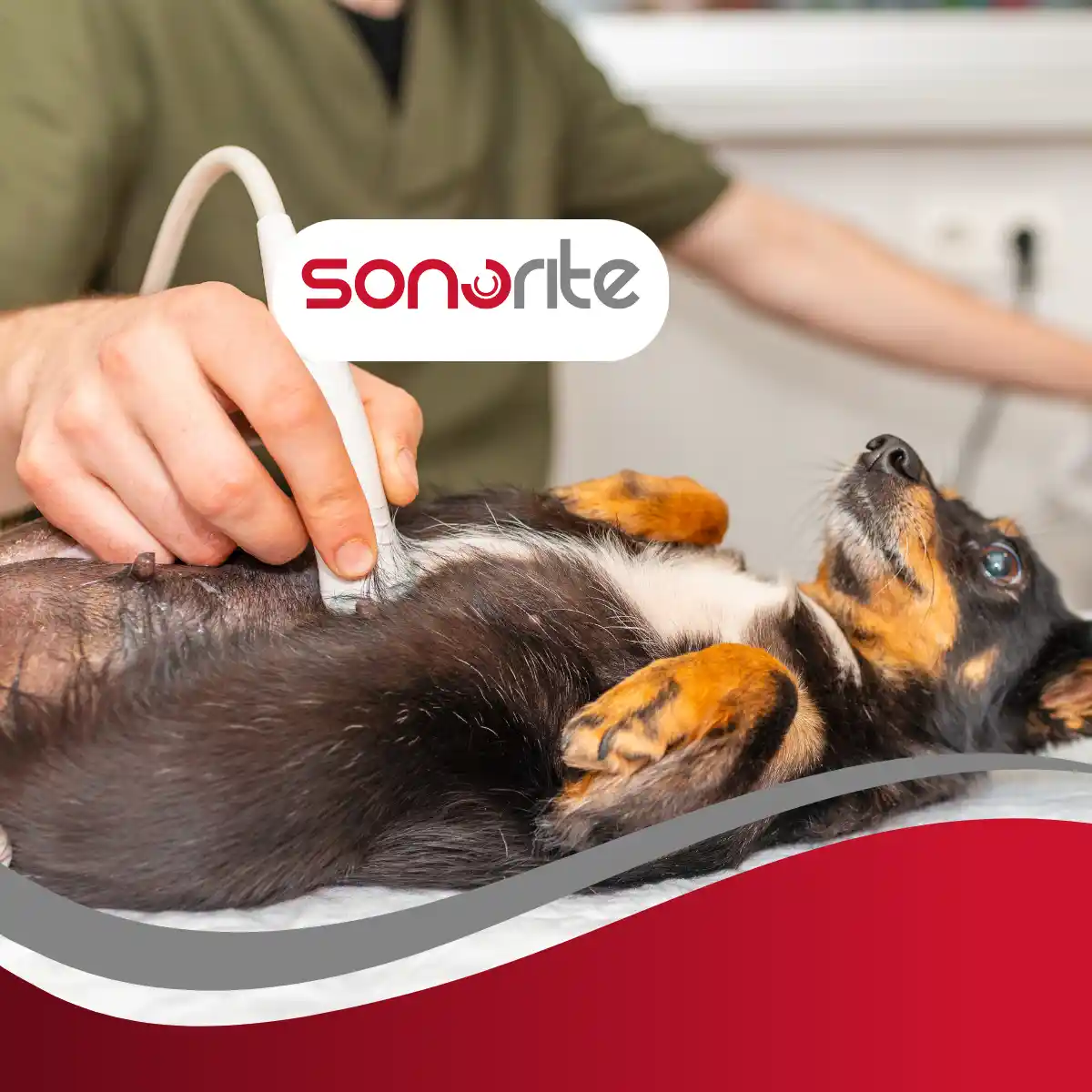
Performing a quick AFAST scan significantly enhances emergency outcomes. For first-opinion veterinarians, especially those with limited experience in ultrasound, mastering AFAST and TFAST can greatly improve your standard of care in a practical and achievable manner.
First-Opinion Practice Power | Mindray Vetus E3
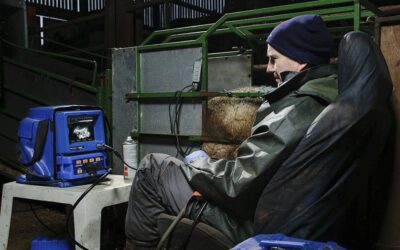
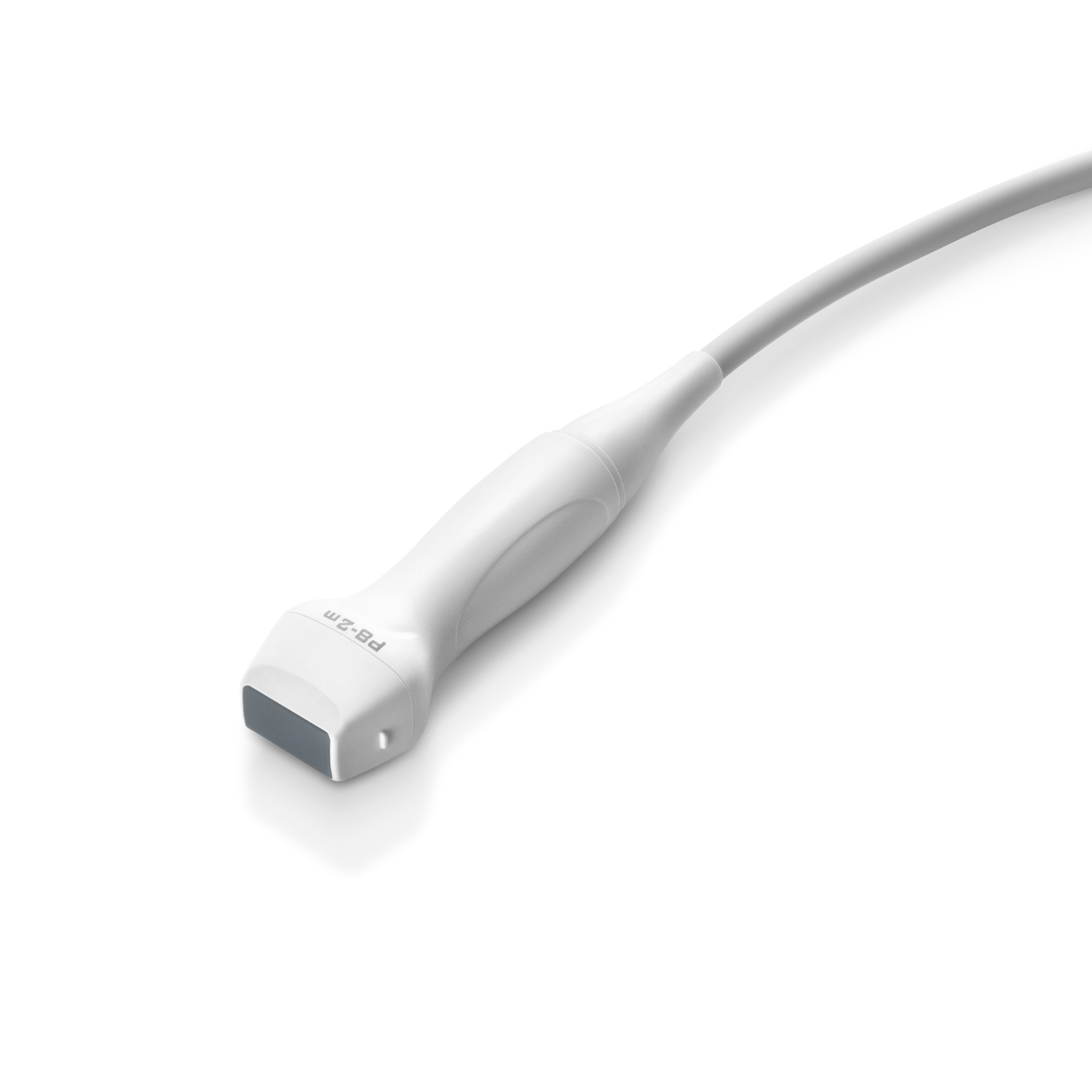
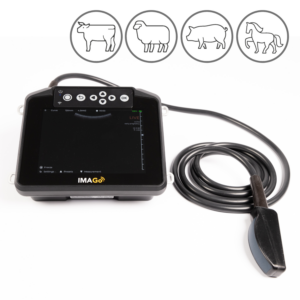
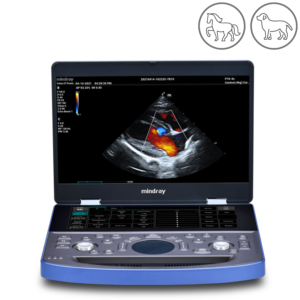
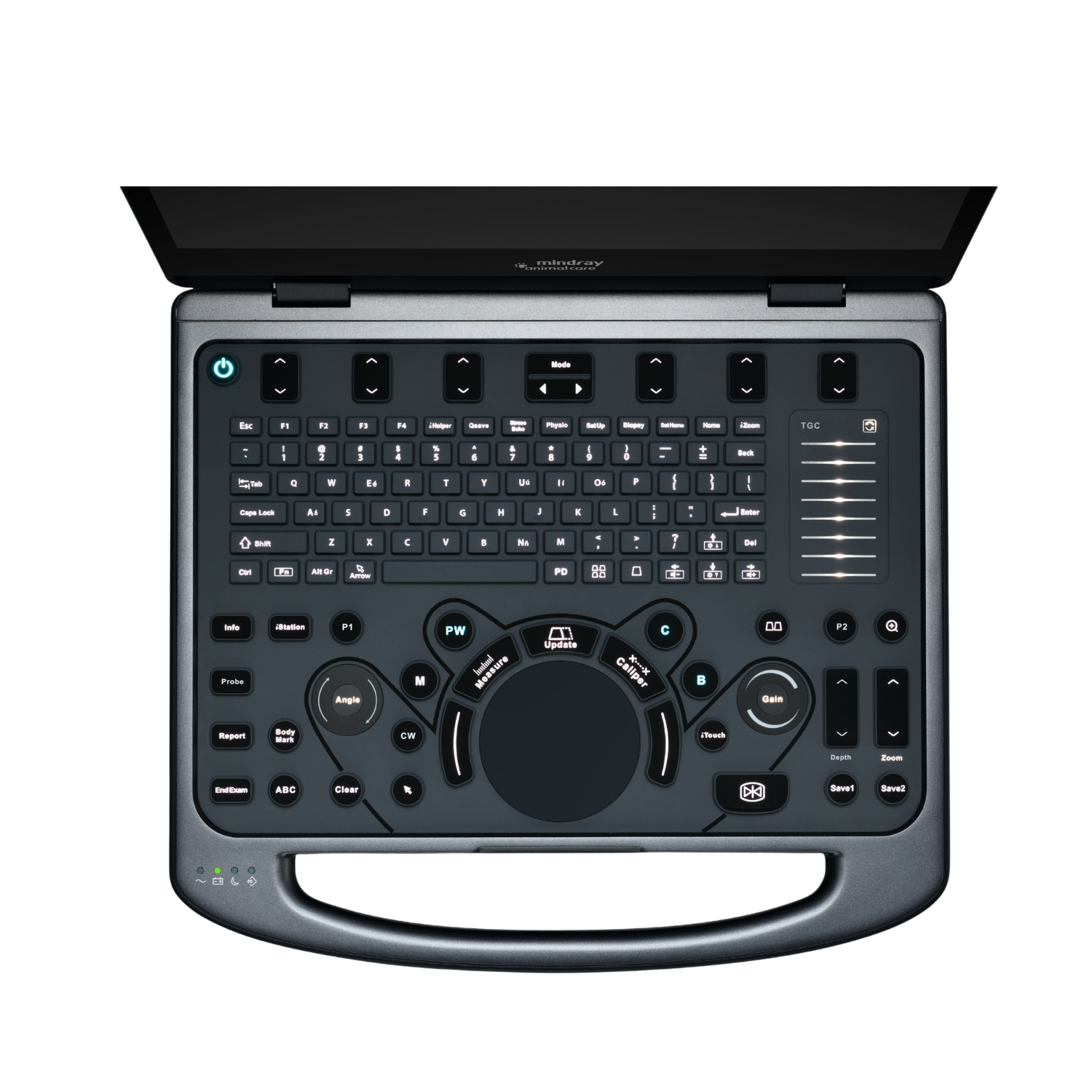
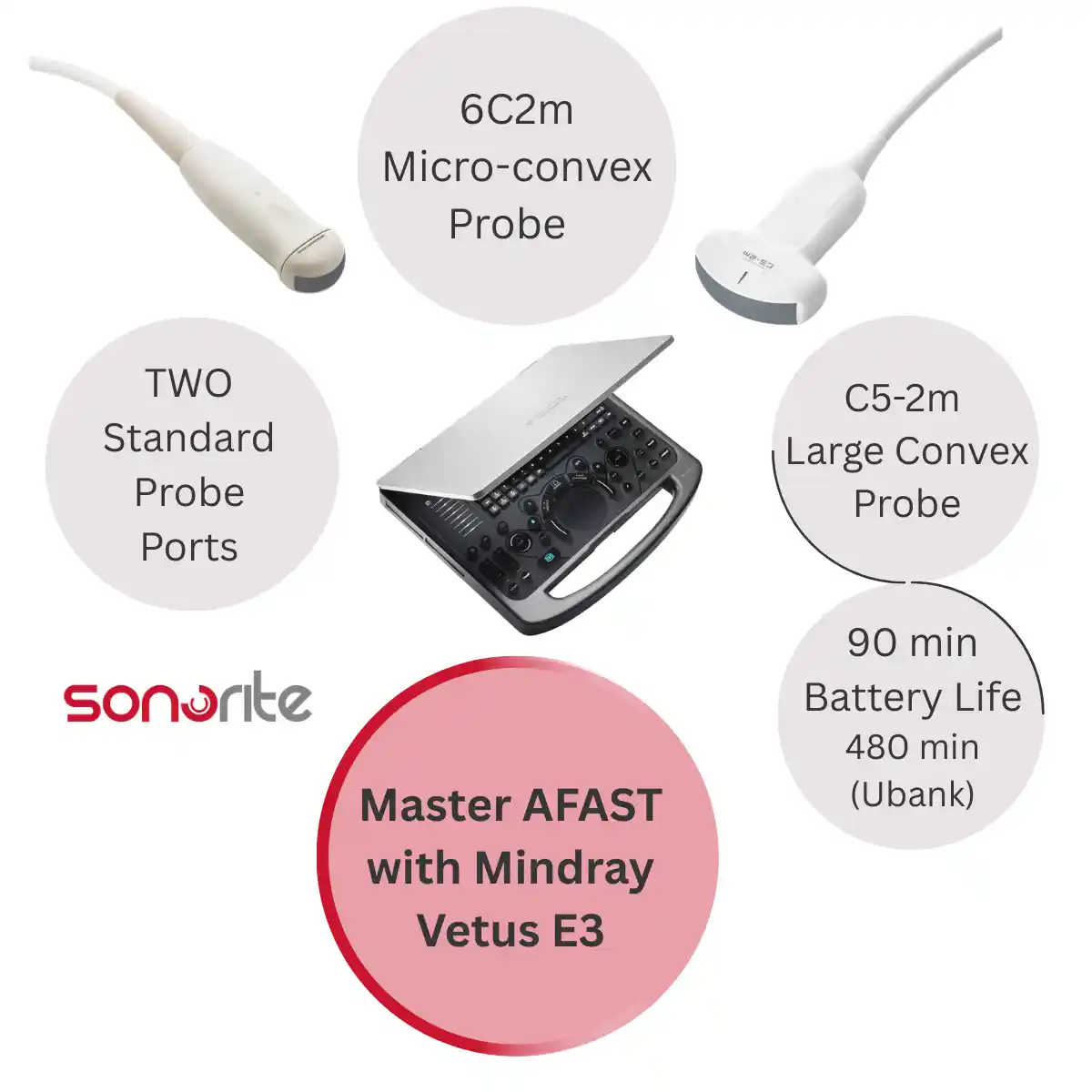
Use AFAST to scan four windows in 3-6 min with the portable Mindray Vetus E3:
- 90 min battery life
- waterproof control panel
- two probe ports
- optional mobile cart
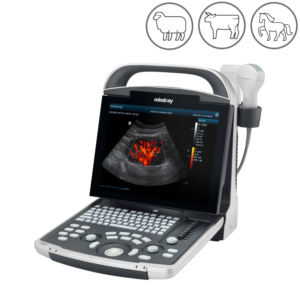
The Mindray Vetus E3 is a perfect machine for general practitioners and can be pivotal in transforming triage challenges into precise diagnostic decisions. This portable machine also provides the image quality and scope to allow for a high standard of ultrasound to be performed in clinic, at an entry-level price point.
Confidently Scanning AFAST Windows
Integrating AFAST into physical exams takes just 3-6 minutes and becomes a cost-effective and easy-to-master screening tool, boosting diagnostic confidence.
Scanning specific acoustic quadrants is more accurate than radiography for detecting free fluid.
Typically performed in right lateral recumbency, scan positions can be varied based on patient stability.
Reliable abdominal fluid scores can be achieved in different positions, like standing or sternal recumbency, as long as the operator is consistent in their approach.
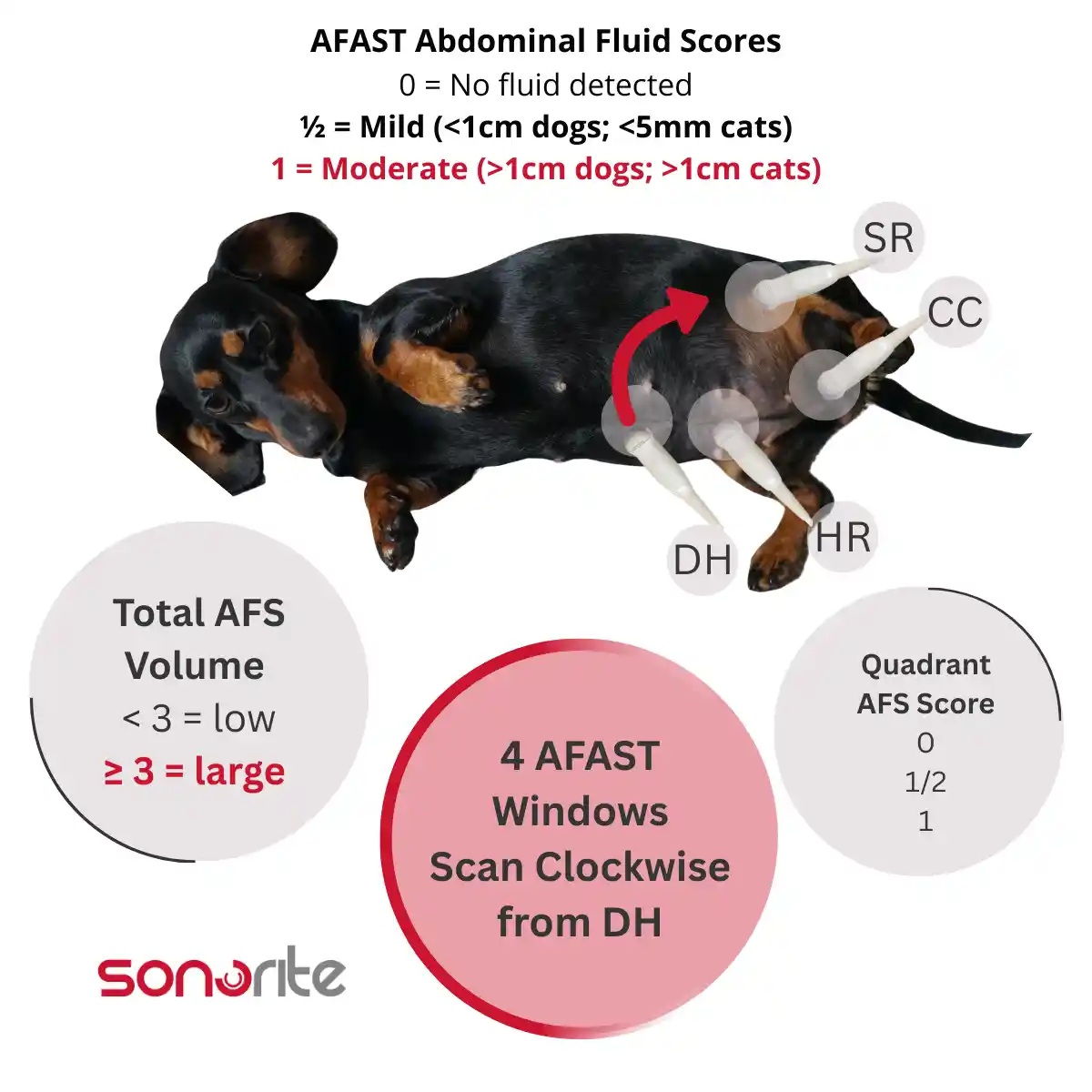
No clipping is required for preparation. Just wet and part the fur with surgical spirit, apply coupling gel, and begin at the subxiphoid, scanning clockwise through the four windows: Diaphragmatic-hepatic (DH), Splenorenal (SR), Cystocolic (CC), and Hepatorenal (HR). Identify crucial anechoic triangulations and note any organ anomalies.
Key AFAST Details
The AFAST scan evaluates four key abdominal sites.
- Four Quadrants:
- Diaphragmatic-hepatic (DH)
- Splenorenal (SR)
- Cystocolic (CC)
- Hepatorenal (HR)
- Scoring Each Quadrant:
- Each quadrant is assessed for the presence of anechoic (black) fluid.
- A score is assigned based on the amount of fluid detected.
- Fluid Scoring (Modified Method):
- 0: No fluid detected.
- 1/2: Mild fluid presence (< 1cm in dogs, less than 5mm in cats) *
- 1: Moderate fluid presence (> 1cm in dogs, > 1cm in cats) *
* Maximum fluid depth volume
- Total AFS Score:
- The scores from each quadrant are summed to form a total AFS score.
- Total AFS < 3 – low volume bleeder
- Total AFS ≥ 3 – large volume bleeder
- The total score helps quantify the overall fluid burden and assesses the severity of the condition.
Clinical Use:
- Guidance on Intervention: Higher scores may indicate a need for more immediate intervention, particularly in trauma patient cases where haemoabdomen is suspected or confirmed.
- Monitoring: Repeated scoring during treatment can help assess the efficacy of interventions and track changes in fluid accumulation.
Considerations:
- Operator skill and experience can affect scoring accuracy.
- Consistency in scanning technique is critical for reliable results.
- Fluid scores are integrated with other clinical findings for comprehensive assessment.
Elevate Your Skills with Sonorite CPD courses and the Mindray Vetus E3
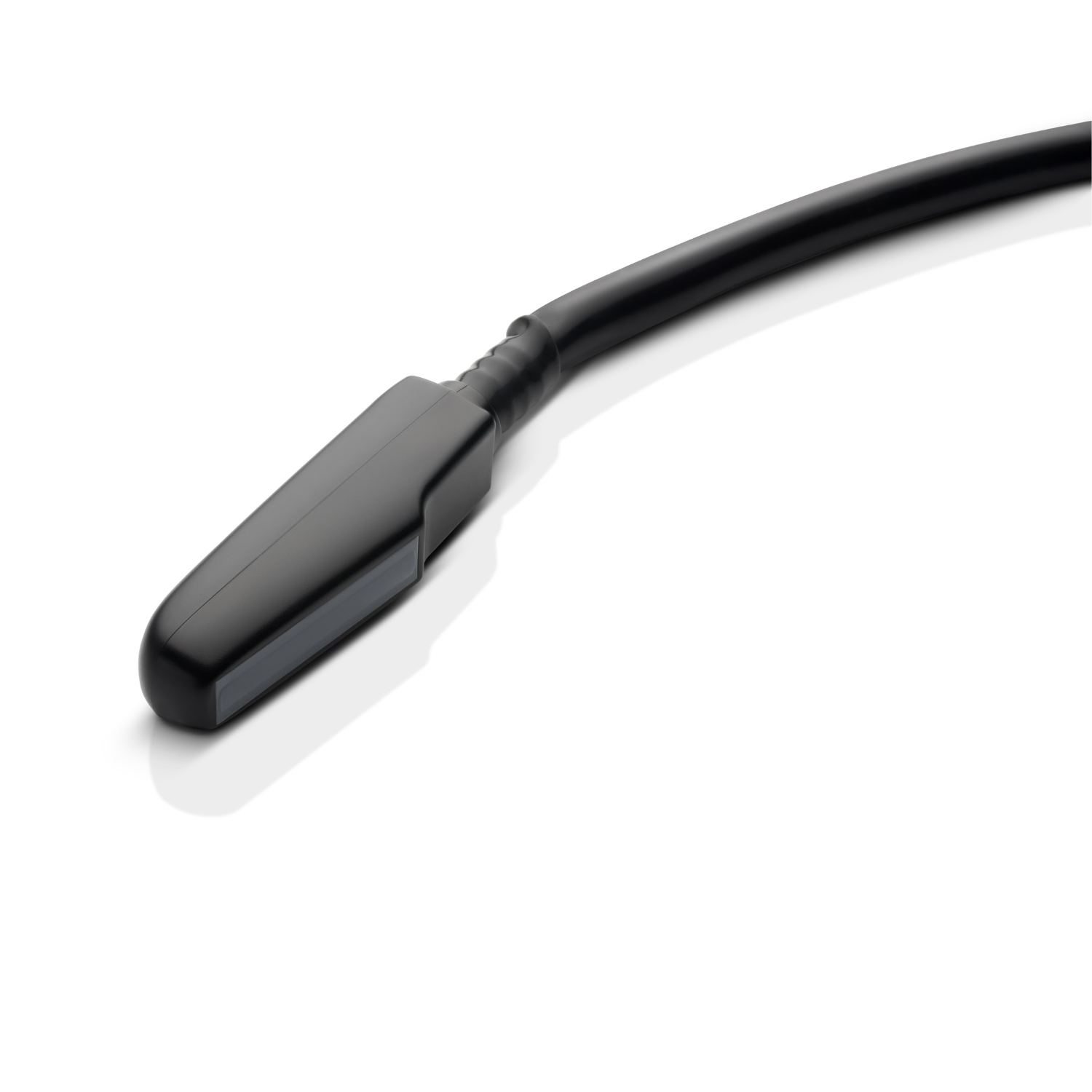
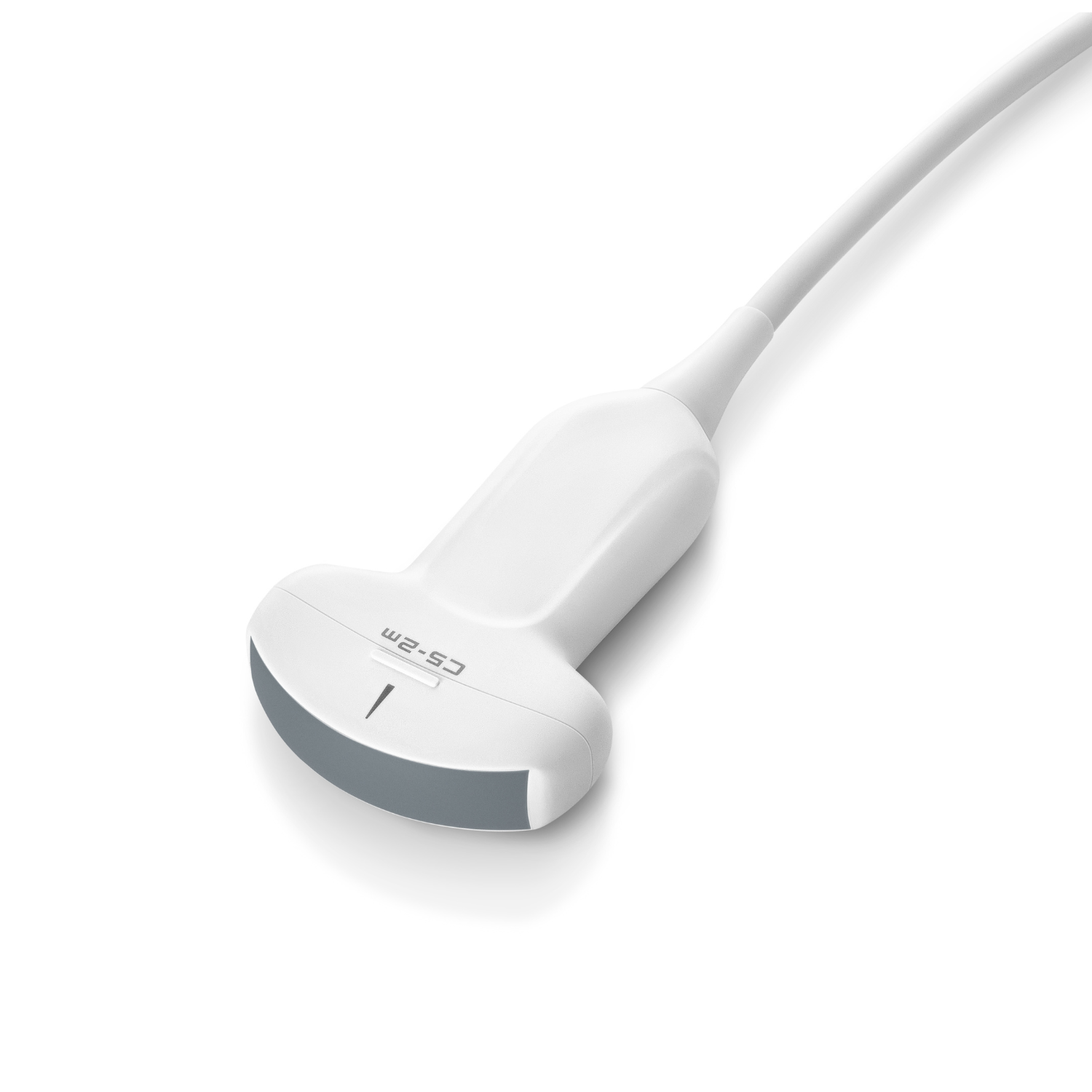
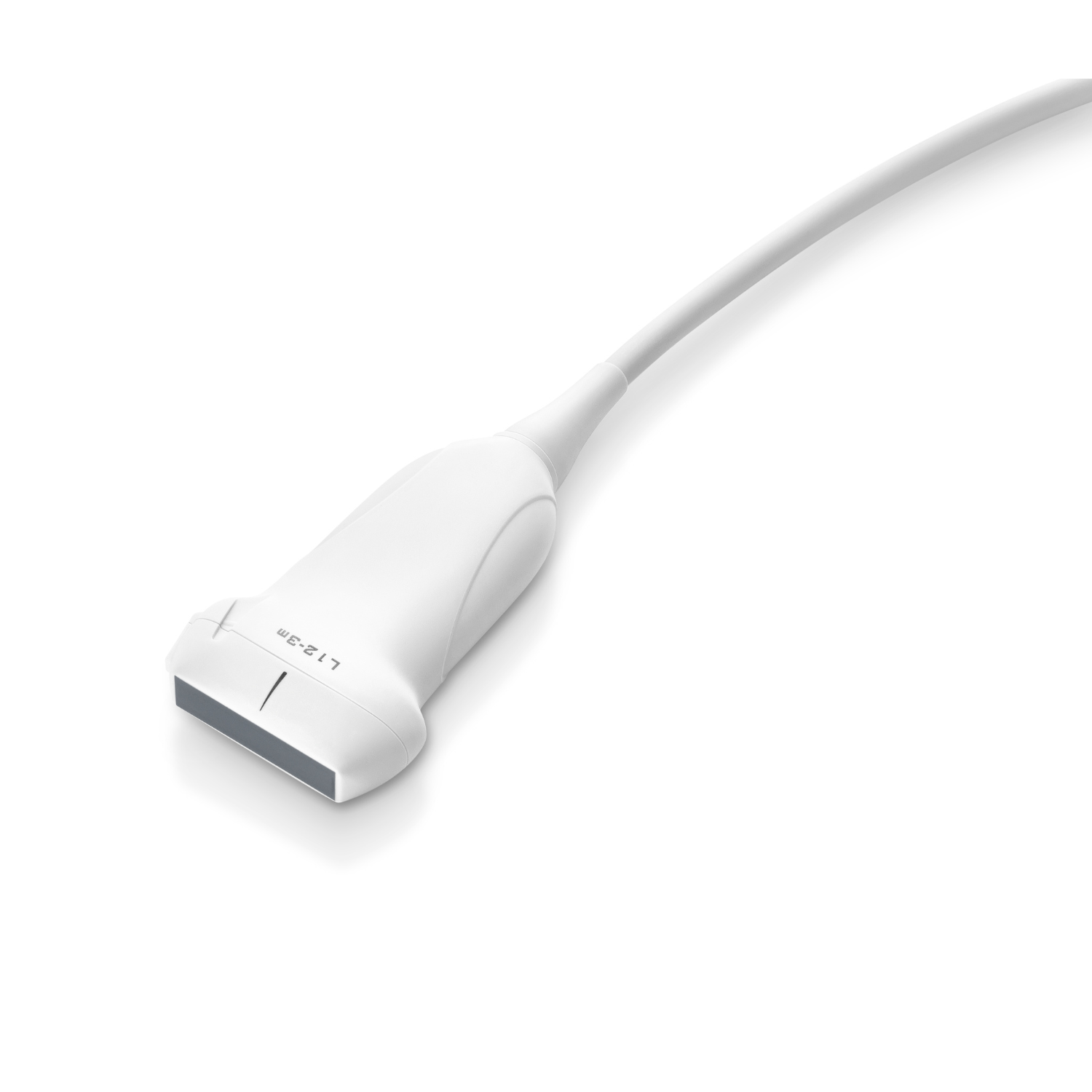
Ideal for free-fluid detection, the scanner functions as a modern and comprehensive companion animal imaging tool, complete with good battery life and two probes, all in a portable, streamlined package.
Remember, many critically ill patients present with free abdominal fluid (detectable by AFAST as low as 2ml/kg), and this is crucial to find in order to refine your differential list.
Sonorite proudly supplies the Mindray Vetus E3 and offers CPD-accredited courses to elevate your ultrasound expertise. Contact us to discover how we can support your practice.
Definitions
AFAST – Abdominal Focused Assessment with Sonography for Trauma, Triage, and Tracking
AFS – abdominal fluid scores
References
1. Lisciandro GR, 2020. The Day I Didn’t Use Ultrasound What Did I Miss? – AFAST, TFAST, Vet BLUE – The Global FAST approach. Available at: https://www.livma.org/uploads/5/6/5/6/56564355/livma_proceedings_tdiduu_what_did_i_miss_-_livma_10-7-2020.pdf (accessed 22.02.2026)
2. Lisciandro GR, 2017. Abdominal FAST (AFAST®) and Its Fluid Scoring System for Trauma, Triage, and Tracking – Parts I and II. Available at: https://wendyblount.com/articles/ultrasound/2Article-AFAST-2017SWVS-Lisciandro.pdf (accessed 22.2.2026)
3. Lisciandro GR, Lagutchik MS, Mann KA, Fosgate GT, Tiller EG, Cabano NR, Bauer LD, Book BP, Howard PK. Evaluation of an abdominal fluid scoring system determined using abdominal focused assessment with sonography for trauma in 101 dogs with motor vehicle trauma. J Vet Emerg Crit Care (San Antonio). 2009 Oct;19(5):426-37. doi: 10.1111/j.1476-4431.2009.00459.x. PMID: 19821883.
4. Lisciandro GR. Focused abdominal (AFAST) and thoracic (TFAST) focused assessment with sonography for trauma, triage and monitoring in small animals. J Vet Emerg Crit Care 2011;20(2):104–122.